
Scientists create a "woolly mouse" with woolly mammoth DNA
Scientists Create Woolly Mouse Using Mammoth DNA
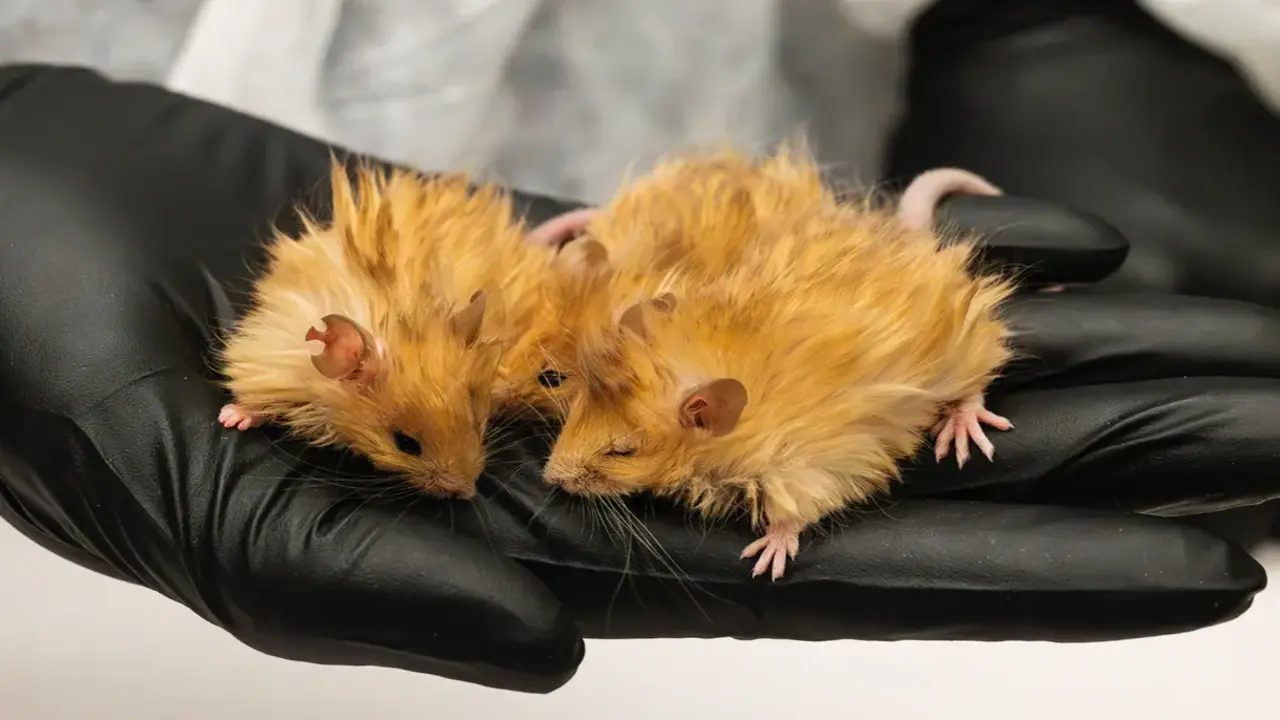
On March 4th, 2025, scientists announced the creation of a new species of mouse by incorporating mammoth DNA. This "woolly mouse" has curly whiskers and wavy, light hair that grows three times longer than that of an ordinary lab mouse. Researchers believe this breakthrough could be a crucial step toward restoring the woolly mammoth.
A Step Toward Reviving the Woolly Mammoth
While the woolly mouse behaves like a regular mouse, its thick and long fur raises questions about its ability to survive in cold temperatures. Some experts are skeptical, arguing that while the woolly mouse has similar fur, it lacks the body mass and natural heat retention needed to endure extreme cold like the woolly mammoth once did. Colossal, the company behind this experiment, claims that the woolly mouse helps bridge the gap between specific DNA sequences and physical traits that enable adaptation to cold climates. Dr. Beth Shapiro, one of the scientists involved in the project, stated, “It is an important step toward validating our approach to resurrecting traits that have been lost to extinction and that our goal is to restore.”
How the Woolly Mouse Was Created
The ability to genetically modify animals in this way has sparked interest and debate. Professor Love Dalén, an expert in evolutionary genomics at Stockholm University, emphasized the importance of this breakthrough: “I think that the ability to edit multiple genes at the same time in mice, and to do so and obtain the expected woolly appearance, is a very important step.” Colossal's ambitious plans extend beyond the woolly mouse. The company aims to recreate the woolly mammoth, dodo, and Tasmanian tiger (thylacine) by editing the genome of each species' closest living relative to produce hybrid animals that resemble their extinct counterparts. They hope to reintroduce woolly mammoths to the Arctic by 2028.
The Future of De-Extinction
To create the woolly mouse, Colossal scientists identified genetic variants found in mammoths and their closest living relative, the Asian elephant. They studied ten key genes related to hair thickness, texture, color, and body fat. The researchers specifically targeted the FGF5 gene, which regulates hair growth, and modified three additional genes responsible for hair follicle development, wavy coats, and curled whiskers.
Ethical and Financial Considerations
While some experts praise this scientific progress, others question whether the funding should be allocated elsewhere. Critics argue that reviving extinct species could divert resources from conserving endangered animals. Dr. Tori Herridge, a Senior Lecturer at the University of Sheffield, cautioned, “While we know a lot about mouse genetics, we know much less about mammoths and elephants. It isn’t yet known which sections of the genome are vital for achieving the characters needed to make an elephant fit for life in the Arctic Circle.” Colossal explained that they started with mice because reproductive technologies are well understood in rodents, whereas elephant reproduction remains challenging. Ben Lamm, the company’s founder, revealed that since its establishment in 2021, Colossal has raised $435 million to support its de-extinction efforts. With only three years until their proposed mammoth reintroduction, many are left wondering: Can Colossal achieve its 2028 goal, or will the challenges of genetic engineering and ethical considerations slow their progress?